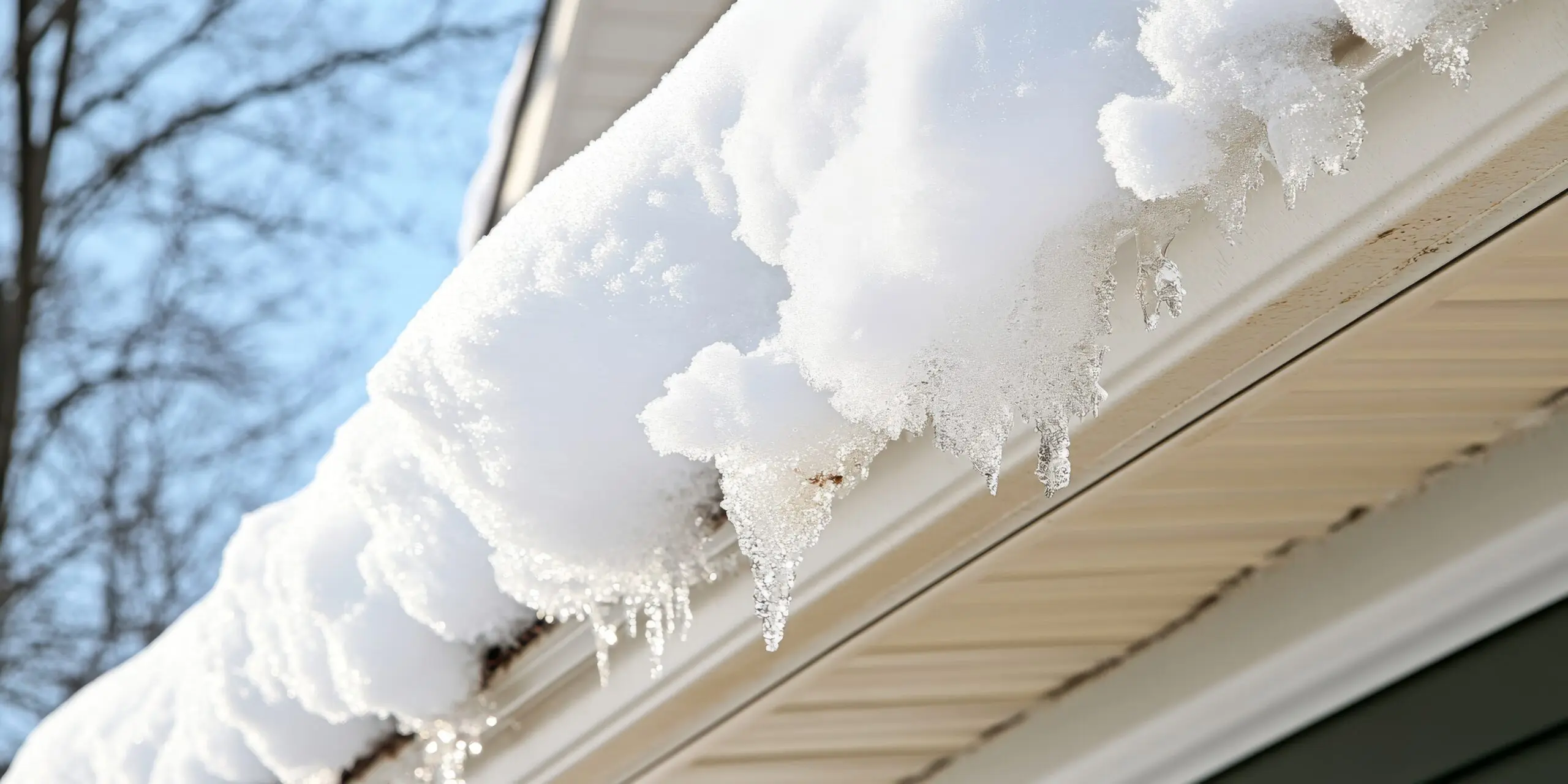
Ice damming: What homeowners need to know
What is ice damming?
Ice damming occurs when snow on your roof melts and refreezes at the edges, forming a barrier that prevents proper drainage. This trapped water can seep under shingles, causing leaks and potential structural damage to your home.
What causes ice dams?
Several factors contribute to ice dam formation, including:
- Poor attic insulation and ventilation – Warm air from your home escapes into the attic, causing snow on the roof to melt. The water then refreezes at the eaves.
- Fluctuating temperatures – Sudden temperature shifts between freezing and thawing contribute to ice dam buildup.
- Heavy snowfall – More snow means more potential for melting and refreezing.
- Blocked gutters – Clogged gutters prevent water from draining properly, increasing the risk of ice accumulation.
Risks and damages caused by ice dams
Ignoring ice dams can lead to serious problems, such as:
- Roof damage – Water seepage can rot shingles, underlayment, and decking.
- Interior leaks – Water can penetrate ceilings and walls, causing stains, peeling paint, and mould growth.
- Gutter damage – The weight of ice can tear gutters away from the house.
- Structural issues – Prolonged exposure to moisture weakens the structural integrity of your home.
How to prevent ice dams
Taking proactive steps can help protect your home from ice damming:
1. Improve attic insulation and ventilation
Proper insulation keeps warm air inside your home, reducing roof snow melt. Ensure your attic has sufficient ventilation to regulate temperature and moisture levels. “You should regularly check how much attic insulation you have in your attic and top it up as required,” advises Greta Gerstner, Senior Insurance Advisor at Westland Insurance.
2. Clear your roof after heavy snowfalls
Using a roof rake, safely remove excess snow from the edges of your roof to minimize melting and refreezing. “You should never go on the roof to remove snow in the winter. Only clear from around the roof’s lower edge and soffit if it is safe to do so from a ladder,” cautions Greta.
3. Keep gutters clear
Regularly clean gutters and downspouts to allow proper drainage. Consider installing gutter guards to prevent debris buildup. “Large groups of icicles hanging from the gutters can be a sign of an ice dam” advises Greta Gerstner.
4. Seal air leaks
Identify and seal any air leaks in your attic, such as gaps around vents, light fixtures, and chimneys.
5. Install heat cables
Heat cables along the roof’s edge can help melt ice and prevent dams from forming.
What to do if you have an ice dam
If you notice an ice dam forming, take these steps:
- Remove snow safely – Use a roof rake with an extended handle to clear snow from the edges.
- Create drainage channels – Carefully use an ice melt product to create paths for water to drain.
- Avoid hacking at the ice – Using a hammer or chisel can damage your shingles.
- Call a professional – If the ice dam is large or causing damage, a professional roofing contractor can safely remove it.
Does insurance cover ice dam damage?
Home insurance policies typically cover sudden and accidental water damage caused by ice dams, including roof leaks and interior water damage. However, coverage may not extend to issues caused by poor maintenance, such as clogged gutters or inadequate insulation.
It’s always best to check your policy details to understand your coverage.
Need help finding the right home insurance? Get a quote from Westland Insurance.
Protect your home this winter
Ice damming can lead to costly repairs, but you can minimize risks with the right prevention methods. Regular maintenance, proper insulation, and quick action can help keep your home safe from winter damage.
For expert advice on protecting your home from winter hazards, contact a Westland Insurance advisor today.